
Issues
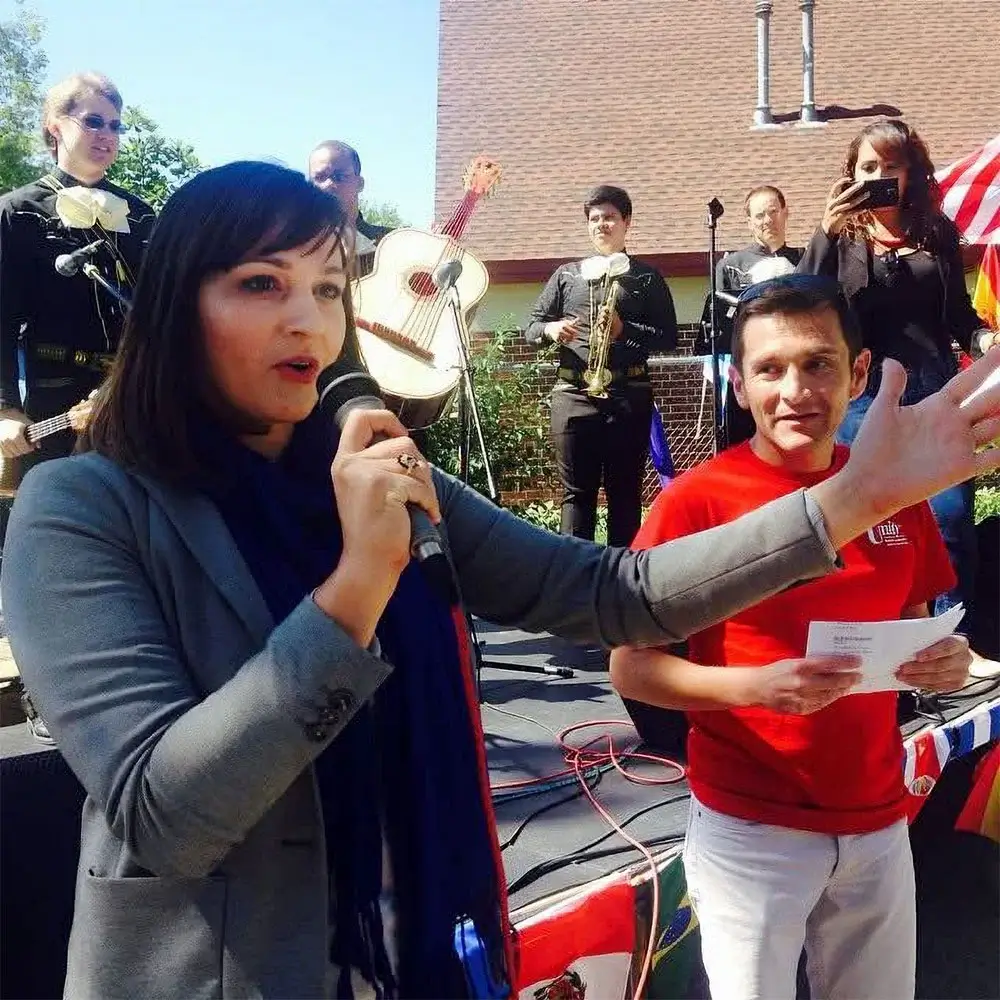
Let’s build a strong state and ensure everyone in Milwaukee has great education and the state ensures our residents have the resources to affordably the lives and professions they’re passionate about.
For the first time in more than 15 years, the Democrats have the capacity to control both houses in the Legislature and Governor – that will require a different style of Leadership, so it’s time to Elect Bridget!
Bridget’s priority as your representative is to be a tireless fighter for Milwaukee, and to deliver progress and resources for Milwaukee. She does this through leadership rooted in professionalism, compassion, a positive spirit and problem solving. This will be vital within a legislative environment that is historically hostile towards prioritizing services and resources to the City of Milwaukee.
Renter or owner, every person deserves a safe, affordable home in neighborhoods that provide strong quality of life.
- Improve regulatory, zoning and financing barriers to Missing Middle Housing options, especially owner-occupied housing to improve access to quality, affordable housing for every neighborhood and community
- Formally repeal under state law housing covenants that discriminate based on race
- Strengthen tenant protections & rollback multiple bills of Walker-era anti-tenant legislation that stripped decades of tenant protections from Wisconsin communities
- Establishing uniform state-wide Chronic Nuisance framework legislation against slumlords
- Quality Affordable Housing in every neighborhood & ideally in every project: Incentive statewide frameworks to include 30% & 50% AMI housing in market-rate development through expanding affordable housing trust fund resources
Working people and small businesses are what makes Milwaukee special. Let’s invest in them over corporate wealth and support a new generation of a strong working class.
- Expand health insurance access and benefit pools for small business employees in line with what State Senator Kelda Roys is proposing.
- Make use of the M.I.T. Living Wage Calculator to raise the state’s minimum wage to at least the living wage of a childless adult ($21/hour for Milwaukee County) & tie to inflation in perpetuity.
- Repeal the Scott Walker Tax Breaks, especially the Manufacturing and Agriculture Tax Credit (MAC) – The Legislative Fiscal Bureau (LFB) estimated the MAC reduced state income tax collections by an average of $341.0 million each year between 2017 and 2023.
- Commercial tenant bill of rights – Much like residential tenants, there’s little to no protections for commercial tenants protecting them against landlords, creating a legal environment that’s unnecessarily risky for small Wisconsin businesses to open and operate within, and creating a lack of stability for communities’ access to goods and services.
Living Costs Have to Work for Working People
- Utility costs have been increasing to rate payers, and Wisconsin has limited capacity to handle increased demand from large corporate and agriculture users without significantly burdening everyday citizen ratepayers without state intervention NOW.
- Establish ratepayer price ceilings set annual ceiling at 3% / tie ratepayer increases to Consumer Price Index
- The Public Service Commission needs a more thorough and integrated regulatory process to approve and onboard potential new energy demand, including with other agencies, to ensure that full environmental, health, and economic consequences are mitigated
- Expand Low Income Utility Assistance, especially in areas with recent outsized rate hikes (WE Energies is a good example of such a utility).
- Reinstate and expand renewable energy efficiency rebates and cost-sharing funds that Republicans have gutted, including for tenants (residential and commercial)
- Build statewide law establishing boundaries on utility impacts to rate payers from large-scale energy users – especially data centers
- Dismantling Food Deserts
- Grocery Store funding: Expand state land use incentives (TIF, state New Market Tax Credits, Dept. of Agriculture grants, etc.) to offset real estate, rent and development expenses for new and expanding groceries
- Expand funding streams through Dept. of Financial Institutions, Dept of Revenue for low-interest loans for operating expenses and gap-financing – especially in times of disaster declarations
- Shore up state-wide zoning laws to enable grocery vending and sales in a maximum allowable area (CSA pick up sites, community farmers markets, etc.)
- Expanding Day Care Access & Improving Worker Wages
- Look to Minnesota’s recent funding initiatives to increase staff wage competitiveness
- Provide small dollar grants to expand facilities and staffing to increase child enrollment capacity
Milwaukee is more than its freeway and highway spending. Our success is the most important benchmark for Wisconsin’s success (even if others don’t or can’t acknowledge it). It’s long past due that Milwaukee starts receiving money, resources, and talent to assist it in building a thriving future for all of its residents, especially around critical public assets.
- Improve our Transportation Networks and create a funding stream to increase Bus Rapid Transit, Metro infrastructure, and move forward with a Milwaukee to Madison rail line
-
- Invest in significant Safe Streets and bicycle trail improvements to bring people and community vitality back to our neighborhood streets.
- Equitable Taxes & Quality services – Overhaul the state shared revenue formula to ensure that Milwaukee has quality resources to support its community needs.
Our community’s success is vitally linked with the quality, use, and public access of our waterways. It’s time to have clean water and quality infrastructure.
- Fight PFAS & other forever chemicals statewide from contaminating our water sources and create a public/private mechanism to fully fund remediation of public & private well water
- 100% public lead pipe replacement & generous homeowner lateral repayment program
- Improve the quality of the Milwaukee River to allow for public swimming (If Chicago can do it, so can we!)
- Ensure and improve public access to Lakeshore State Park
- Fight for state resources to fully realize public access and completion of the Milwaukee Harbor Plan
- Create a clear legislative framework to ensure unequivocable public access of our Lake Michigan shoreline
Bridget believes that Women’s Rights are Human Rights. It’s also smart economics. All residents deserve equal access to workplace safety, equal pay, paid parental leave, full access to healthcare, and more.
- Health Care Access
- Match Minnesota’s Paid Family & Medical Leave standards – Provides partial wage replacement for 12–20 weeks of leave in a 52-week period for medical leave, bonding, or caring for a family member.
- Match Illinois’ IVF, Infertility and Reproductive Health coverage within state health plan coverage requirements
- Require all labor & delivery units in Wisconsin to stock a “crash cart” of medical supplies specifically designed to improve maternal health outcomes during delivery
- Closing the Wage Gap: Equal Pay & Access to Advancement
- Prohibiting employers from asking about pay history
- Requiring employers to post pay bands when hiring
- Adequately staffing and funding the Equal Rights Division in the Department of Workforce Development and other related agencies charged with enforcing nondiscrimination laws.
Our schools should never be on the chopping block. Invest in our infrastructure and treat quality education as the critical community asset that it is.
K-12 Education
- Wisconsin, which launched the first school voucher program in the nation in Milwaukee 35 ago, has steadily increased both the size and per-pupil expenditures of its system of voucher schools. That’s despite a research consensus that school vouchers have not improved academic outcomes for students and, in fact, have done significant harm. Remove state voucher funds for private school tuition. Period. (That will get us a long distance to funding the next items on this list..) (More info here)
- Respect educators as the talented professionals they are and work to improve teacher retention rates by improving pay for starting educators and funding meaningful retention-support efforts
- Increase state-wide funding for lead paint removal in our public schools- Setting statewide standards on related capital improvement, maintenance schedules and infrastructure outlays
- Restructure school funding formulas to properly account for true cost-adjusted per pupil spending
- Fund curriculum that supports the Science of Reading and enact stronger related statewide education curriculum standards
UW-Milwaukee & Higher Education Investment
- WI ranks 43rd in the nation in public funding per student, let’s increase state financial support of our public university students when it comes to their tuition expenses.
- Following the research of Edward Glaeser and the examples set by cities like Pittsburgh to unite public and private university curriculum access, develop a Milwaukee Council on Higher Education to facilitate comprehensive coordination of area higher education facilities, faculty, and community resources
We cannot allow for state-sponsored discrimination of queer and trans people. Period. That includes policies that creates negative health and community outcomes for youth, increased rates of homelessness, incarceration, and substance abuse, and limitations on parenthood.
- Enshrine marriage, parenthood, property, employment & health rights into state law not to assume legal basis on court precedents.
- Increase access and public resources to gender-affirming health care, as allowed under federal law and policy
- Codify Gov. Evers Executive Order #1 into permanent state law
Government effiency cannot come at the cost of individual liberty. Data gathering, sharing, and use needs to work in an accessible, equitable, transparent, and neutral fashion that doesn’t harm individual privacy, autonomy, or civil rights. Just because we can, doesn’t mean we should.
- Just say no to commercial and public use of facial recognition software, and explicitly legislate against nonconsenting biometric access to personal devices.
- Ensure a state-wide legal framework is established that any facial recognition software contracted or used within Wisconsin, especially by any public agencies, has their data sharing agreements publicly registered on file with the State of Wisconsin.
- Stop attacks on voter registration access and protect our right to vote for all citizens. Reinstate landlord move-in voter registration form requirement state-wide.
Milwaukee is known for its strength in producing wonderful products. Let’s get state resources to invest in the next generation of economic success by supporting small, new, emerging products and industries.
- Recruit a public-private funding model for a commercial kitchen facility modelled on the REAP Kitchens leveraging vacant commerical industrial space to serve as an incubator to small food-based businesses in and around District 19
- Leverage critical catalytic cluster resources and land use. For Instance: Look to create a permanent Makers Public Market and craft incubator production space utilizing vacant industrial space, similar to the spaces developed by Common Wealth Development
- Expanding the work of Wisconsin’s network of Small Business Development Centers with additional state funds to further small business incubation, tenancy and funding resources for small businesses (sub 30 employees)
- Create a one stop-shop and and map database for public and private market analysis data and local land use plans within the state’s regional economic development hubs
- A great generational shift is upon us. Utilize our state business development centers, low interest loans, and business stabilization funds to help business owners looking to retire find young owners who are interested in taking over the businesses, ensuring that valuable community access to goods and services continues undiminished.
- Expand low interest loans for small businesses to access to capital for gap financing/ operating capital within Wisconsin’s State Small Business Credit Initiative (SSBCI)
- Continue to fund and expand resources for Wisconsin’s Main Street Bounceback Grant Program
We have world class creative assets in District 19. Let’s invest in the people and systems that can ensure healthy, economically viable creative industries.
- Improve legislative framework around Guilds to build a framework for independent and creative professionals that ensure strong wages, access to retirement and health benefits
- Facilitate any state resources as needed and leverage community attention to ensure that our world-class creative assets – including the variety of museums and performance venues of the East Side of Milwaukee – maintain their presence in downtown Milwaukee and ensure they are supported in a manner that allows them to thrive.
A new industrial revolution is at our doorsteps: let’s make sure Wisconsin doesn’t lose the things that make our home special as we emerge into a volatile computing era. Wisconsin communities cannot be pitted against each other and operate in the dark to the public about how data center construction and use is to be handled.
This recent testimony from a Beaver Dam area resident highlights the growing issues right now for Wisconsin residents and small businesses struggling with the environmental, economic, and quality of life impacts these data centers and their construction are posing to our quality of life.
- Data centers owners and operators must be 100% responsible for paying for new costs to utility infrastructure and cannot offload costs onto existing ratepayers.
- Legislate land use best practices to include in any Data Centers built including:
- Standardize statewide use of non-disclosure agreements, public hearings, land use transfers and rezoning, especially in cases involving multiple municipalities and townships
- Create a new regulatory structure to ensure comprehensive state agency review of proposals, including adding new state employees
- Ensure local Comprehensive Plans include performance standards & zoning ordinances actively aligns with the plan;
- Make sure such plans are current before construction approvals are granted
- Never allow “by right” data center development; require local jurisdiction approval.
- Require Tier IV backup generators.
- Max of 55 Db at the sending property line.
- Conduct a pre- and post-construction professional noise study
• Include both perceived noise and low frequency noise. - Demand Long Duration Energy Storage backup using graphene rather than lithium.
- Demand 500’ minimum setback from residential; 1,000’ preferred.
- Incentivize waste heat recapture (district energy) to heat nearby buildings.
- Require accommodation in site design to enable future incorporation of microgram elements (baseload power source, backup power source, backup energy storage, battery and response system, etc.).
- Push utilities to construct a separate, underground high voltage direct current (HVDC) grid for data centers
- Incorporate Green Building Initiative “Green Globe” ratings into buildings
- Ensure utilities state, in writing, where power will come from and where substations will be located

Milwaukee has more than 60 years of active disinvestment – along with many other communities across Wisconsin. We cannot continue the same approach and somehow expect different outcomes – we need a bold strategy! Let’s create a state-owned bank to leverage our money to stay invested right here in our communities in Wisconsin.
Lower fees, more small business investment: A state-owned public bank would take state revenues and actively help community banks and credit unions get more affordable access to capital, enabling more affordable funds for community members and to underwrite community investments.
- The Bank of North Dakota is currently the only state-owned, public bank in the United States, established in 1919 to promote agriculture, commerce, and industry. Taking state tax revenue as deposits, it partners with local financial institutions to provide loans rather than competing with them, reinvesting profits into the state’s general fund.
- This idea is expanding: Last year, senators in the State of Washington introduced an effort to create a state-owned bank.
- In July 2025: Researchers at the University of Michigan explored how the North Dakota partnership model can be scaled to expand access to capital for local banks and credit unions in California, enabling them to offer loans at lower interest rates.
- Expanding access to large amounts of low-cost capital can lead to outcomes like more affordable housing as a result of cheaper building costs
- Benefits for cash-strapped municipalities: For example – Instead of borrowing for a big project at a 10% interest rate, an obligation that taxpayers are required to pay off over time, a city could finance that same project through a public bank at a 2% rate. The project gets built on favorable terms and prevents the municipal balance sheet from being too debt burdened.
- New York, Pennsylvania and Massachusetts have organized movements to create a state-owned bank. California is on the leading edge as the state Legislature in 2019 passed the California Public Banking Act, paving the way for cities and municipalities to create public banks.
- Illinois has explored some variations on the theme. For example, the Illinois Finance Authority operates the Illinois Climate Bank, established in 2021 to fund clean energy projects. The Illinois state treasurer’s office administers an investment pool for local governments, enabling them to earn better returns on their funds.
- Public banks have the potential to serve retail customers, primarily low-income workers without bank accounts who are forced to pay fees to cash checks, reload a debit card or pay a utility bill.